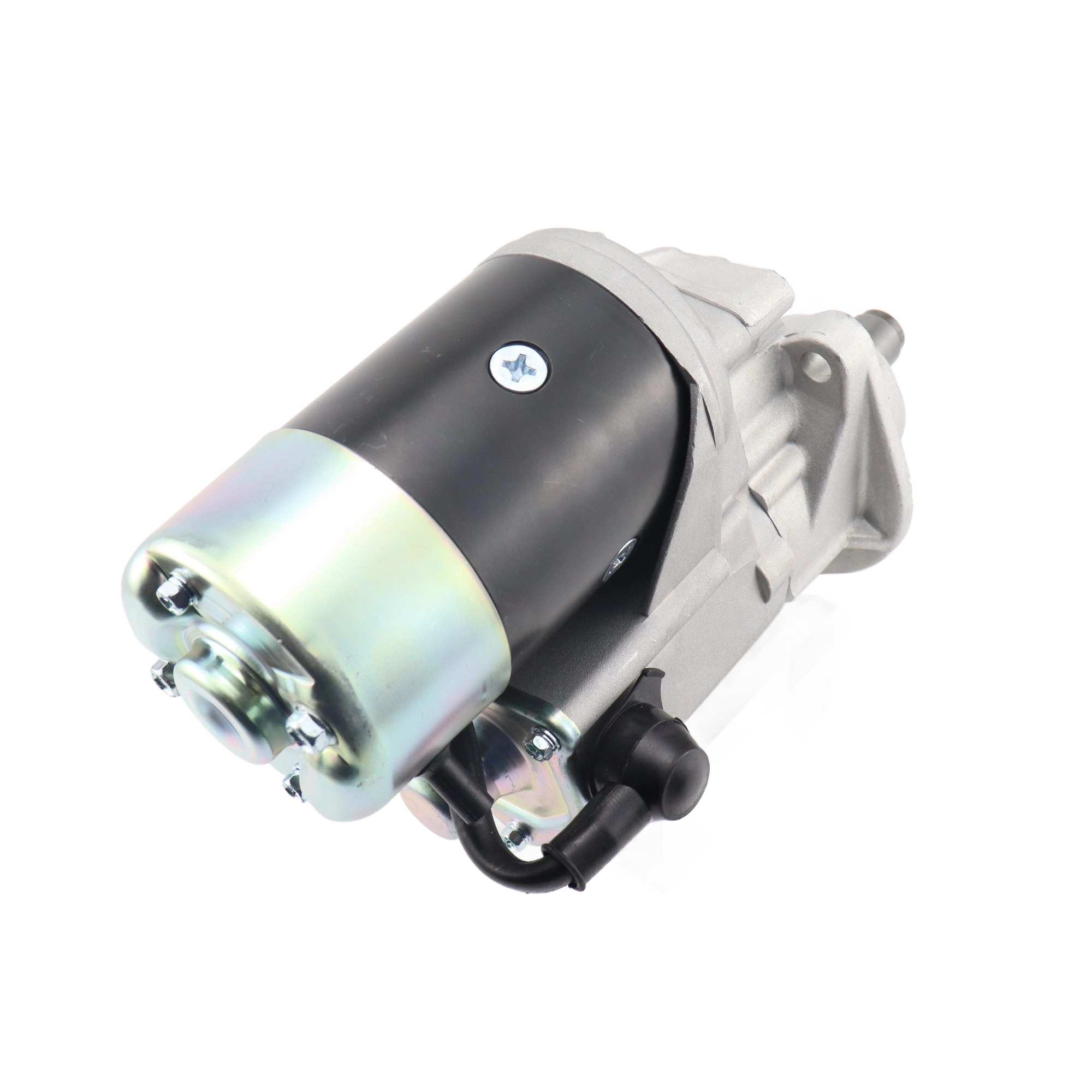
When a commercial vehicle fails to start, the financial bleeding begins immediately. Every delayed delivery or stalled production line directly impacts a company’s bottom line. Unit price often tricks procurement teams into making short-sighted B2B purchasing decisions. However, evaluating the actual quality assurance infrastructure separates dependable partners from high-risk vendors. Poor manufacturing leads to massive warranty claim overhead, severe production delays, and long-term reputation damage for OEMs and aftermarket distributors alike.
You need to understand how top-tier suppliers prevent these catastrophic failures before they happen. We will break down the specific engineering validations, end-of-line tests, and compliance frameworks an expert starter motor manufacturer uses to guarantee component lifespan. Procurement professionals will learn exactly how rigorous testing ensures reliable performance. We will explore the critical transition from raw material audits to extreme environmental testing protocols.
Key Takeaways
True quality control begins at the raw material phase, targeting frequent failure points like solenoid burnout and brush wear before assembly.
A certified manufacturer relies on automated in-process monitoring to eliminate human error in torque and winding applications.
Every shipped unit must be a fully tested starter motor subjected to rigorous load, thermal, and NVH (Noise, Vibration, Harshness) analysis.
Procurement teams should benchmark supplier testing protocols against Tier-1 OEM standards (e.g., DENSO) and verify IATF 16949 compliance.
The Cost of Weak QC: Framing Starter Motor Failure Risks
Starter motors endure intense mechanical stress during every ignition cycle. When they fail in the field, several common culprits frequently emerge. You often see freewheeling clutch malfunctions, commutator pitting, or the ingress of harsh external contaminants. Moisture and road debris easily ruin unprotected internal components. Cheap carbon brushes disintegrate quickly under heavy loads. Weak return springs cause the pinion gear to remain engaged too long. These seemingly small defects destroy the entire unit.
These failures trigger a massive chain reaction across the entire supply chain. Inconsistent manufacturing inevitably yields high Return Merchandise Authorization (RMA) rates. Consequently, downstream customer dissatisfaction skyrockets almost immediately. Distributors lose hard-earned trust. Repair shops waste valuable labor hours handling defective replacement parts. You incur heavy freight costs shipping broken units back and forth.
Procurement teams must fundamentally change how they select suppliers. You cannot simply evaluate theoretical specifications listed on a promotional datasheet. Instead, demand absolute transparency regarding a supplier's failure mode and effects analysis (FMEA). You need vendors who proactively identify risks during the initial design phase. Shifting focus away from basic price tags helps you secure long-term operational stability. True value lies in proven longevity.
Component-Level Validation by a Reliable Starter Motor Manufacturer
A credible supplier inspects everything long before final assembly begins. Material audits serve as the absolute first line of defense. Engineers closely examine raw inputs using advanced spectrometry. They verify copper purity in armature windings to ensure optimal electrical conductivity. They also check the metallurgical integrity of the pinion gear. Weak gears strip easily under heavy engine loads. Proper heat treatment is non-negotiable for these high-stress components.
Sub-assembly testing prevents hidden defects from reaching the final product stage. Facilities perform dynamic balancing on every single armature. This crucial step prevents premature bearing wear caused by high-speed vibrations. Technicians inject epoxy resins to secure windings against centrifugal forces. They also conduct rigorous solenoid cycle endurance testing. They verify contact reliability prior to full integration. A solenoid must click flawlessly thousands of times without sticking.
Modern manufacturing facilities also implement strict traceability protocols. They use barcode or RFID tracking for individual components. If a rare defect occurs, quality teams can isolate the exact bad batch rapidly. They trace the issue back to a specific machine or raw material lot. This isolates problems before they ever leave the factory floor. You never receive compromised inventory.
Assembly Line Automation and In-Process Controls
Manual assembly constantly invites unpredictable inconsistencies. Top-tier factories rely heavily on automation to minimize costly human error. Automated torque drivers apply exact fastening force to every single bolt. They prevent stripped threads and loose housings. Robotic winding machines maintain tight tension and perfect layering across high-volume production. Servo-driven presses insert bearings at precise depths without damaging delicate seals.
Line-side sensors actively monitor these sophisticated automated systems. Soft starters regulate the assembly machinery itself. They prevent damaging voltage spikes during equipment startup. They ensure manufacturing equipment constantly operates within strict calibration limits. If a machine drifts out of tolerance, the sensor network halts production immediately. Supervisors must correct the deviation before manufacturing resumes.
These automated quality control measures adapt beautifully to different production sizes. Consider how facilities handle various specialized orders:
High-Volume Standard Runs: Automation maximizes overall throughput while locking in strict baseline tolerances. Absolute repeatability remains the primary engineering goal.
Custom-Built Orders: Engineers recalibrate robotic arms and torque limits to match bespoke specifications. Sensors adapt to new dimensional requirements almost instantly.
Heavy-Duty Applications: Machinery applies specialized sealants and heavier crimping forces required for commercial or agricultural variants.
This remarkable flexibility guarantees precision regardless of the specific production volume. Quality never drops when switching product lines.
End-of-Line Verification for a Fully Tested Starter Motor
Every unit leaving the facility must mathematically prove its durability. A genuinely tested starter motor undergoes strict load and torque validation. Engineers measure the exact torque output against required specifications. They use specialized test benches simulating realistic engine resistance. The unit must crank the simulated flywheel effortlessly. Weak magnetic fields fail this test immediately.
Extreme condition simulation exposes hidden potential weaknesses. Quality teams run Cold Cranking Amp (CCA) testing inside climate-controlled chambers. They plunge temperatures to -40°C. This proves the motor will perform in freezing winter environments. They also execute punishing thermal stress tests. These evaluations verify internal insulation resistance under heavy continuous current draw. Overheating simply cannot occur under normal vehicle operation.
Finally, inspectors conduct NVH (Noise, Vibration, Harshness) testing. Acoustic and vibration analysis detects hidden internal friction. A motor might visually pass inspection but mechanically fail due to misaligned planetary gears. NVH sensors catch these microscopic anomalies immediately by analyzing frequency spikes. They detect gear whine long before human ears notice a problem. You receive parts ready for immediate, reliable field deployment.
Benchmarking Quality: The Tier-1 Standard
Procurement teams should always evaluate independent manufacturers against legacy OEM standards. A rigorous testing protocol must match or exceed Tier-1 component benchmarks. For example, comparing aftermarket protocols to a genuine DENSO 12V starter motor reveals crucial quality overlaps. Both should utilize premium copper, precision-machined gears, and identical cycle endurance thresholds. Accepting lower standards guarantees higher failure rates.
Certifications prove a supplier's ongoing commitment to these rigorous standards. Automotive supply chains demand ISO 9001 and IATF 16949 compliance. These frameworks mandate strict, highly documented quality management systems. They force manufacturers to employ Advanced Product Quality Planning (APQP). They require continuous control plan updates.
Top suppliers also utilize the 8D (Eight Disciplines) reporting method. This specific framework ensures complete closed-loop defect resolution. When anomalies occur, engineers document the root cause thoroughly. They implement permanent corrective actions immediately. Continuous product iteration keeps the manufacturer ahead of changing industry demands.
Quality Metric
Tier-1 OEM Standard
Certified Aftermarket Standard
Defect Resolution Protocol
Strict 8D Reporting
Strict 8D Reporting
Facility Quality Certification
IATF 16949
IATF 16949 & ISO 9001
End-of-Line Testing Scope
100% Load & NVH Testing
100% Load & NVH Testing
Raw Material Sourcing
Traceable, High-Purity Copper
Traceable, High-Purity Copper
Gear Heat Treatment
Induction Hardened Steel
Induction Hardened Steel
Supplier Shortlisting: How to Audit Your Next Manufacturing Partner
Choosing a new manufacturing partner requires deep technical due diligence. You must ask highly specific questions during any facility tour or virtual audit. General assurances mean nothing without concrete proof. Use these essential questions to evaluate their true capabilities:
Do you perform 100% end-of-line testing or merely rely on statistical batch sampling?
How do you physically isolate and track defective components on the assembly line?
Can you provide detailed failure mode and effects analysis (FMEA) documentation for recent projects?
What specific dimensional checks do you perform on incoming raw materials?
Beyond verbal answers, demand rigorous document verification. Request sample QC charts from recent production runs. Ask for comprehensive PPAP (Production Part Approval Process) documents. A Level 3 PPAP submission includes dimensional results, material certificates, and initial process studies. Reputable suppliers will also gladly share third-party laboratory validations. These documents prove internal claims align perfectly with objective engineering standards.
Once you verify their quality infrastructure, meticulously plan your next steps. Create a framework for requesting an initial sample run. Test this sample in your own facilities. Issue your formal RFQ based on technical and quality alignment rather than simply hunting for the lowest pricing tiers. Superior engineering upfront prevents massive headaches later. You build a resilient supply chain this way.
Conclusion
Stringent quality control fundamentally changes the inherent value of rotating electrical components. It transforms a basic starter motor from a cheap, commoditized part into a serious reliability asset. Careful material audits, automated assembly lines, and extreme end-of-line testing eliminate dangerous guesswork. You gain absolute peace of mind knowing every unit will perform flawlessly under harsh environmental conditions. The initial investment in a highly certified supplier pays massive dividends by eliminating warranty claims.
Stop settling for unpredictable part longevity and frustrating customer returns. Download our detailed technical specification sheet today to see true quality benchmarks. Request a physical sample to test directly against your current suppliers. You can also contact our engineering team directly to discuss your custom manufacturing requirements and specific QA protocols. Secure your supply chain with proven, transparent reliability.
FAQ
Q: What is the acceptable defect rate for commercial starter motors?
A: The automotive industry strictly monitors defect rates using PPM (Parts Per Million) metrics. Top-tier suppliers target a defect rate below 50 PPM for commercial rotating electrical parts. Highly advanced facilities pushing for zero-defect manufacturing often achieve rates under 10 PPM. Maintaining these incredibly low numbers requires automated assembly controls and strict supplier quality management for all incoming raw materials.
Q: Do manufacturers test 100% of their units or use batch sampling?
A: Leading suppliers perform 100% end-of-line testing on every single unit. Batch sampling introduces unacceptable risks for critical rotating electrical parts. Because starter motors endure immense mechanical and thermal stress, every unit must individually pass load, torque, and NVH evaluations. If a manufacturer only tests random samples, they expose buyers to highly unpredictable failure rates in the field.
Q: How does an aftermarket starter motor manufacturer prove OEM-level reliability?
A: Credible aftermarket manufacturers prove parity through comprehensive PPAP (Production Part Approval Process) documentation. They conduct accelerated life testing in climate-controlled chambers to simulate years of harsh use. Furthermore, they secure independent laboratory certifications and maintain strict IATF 16949 quality management compliance. These tangible data points confirm their components match or exceed original equipment specifications perfectly.