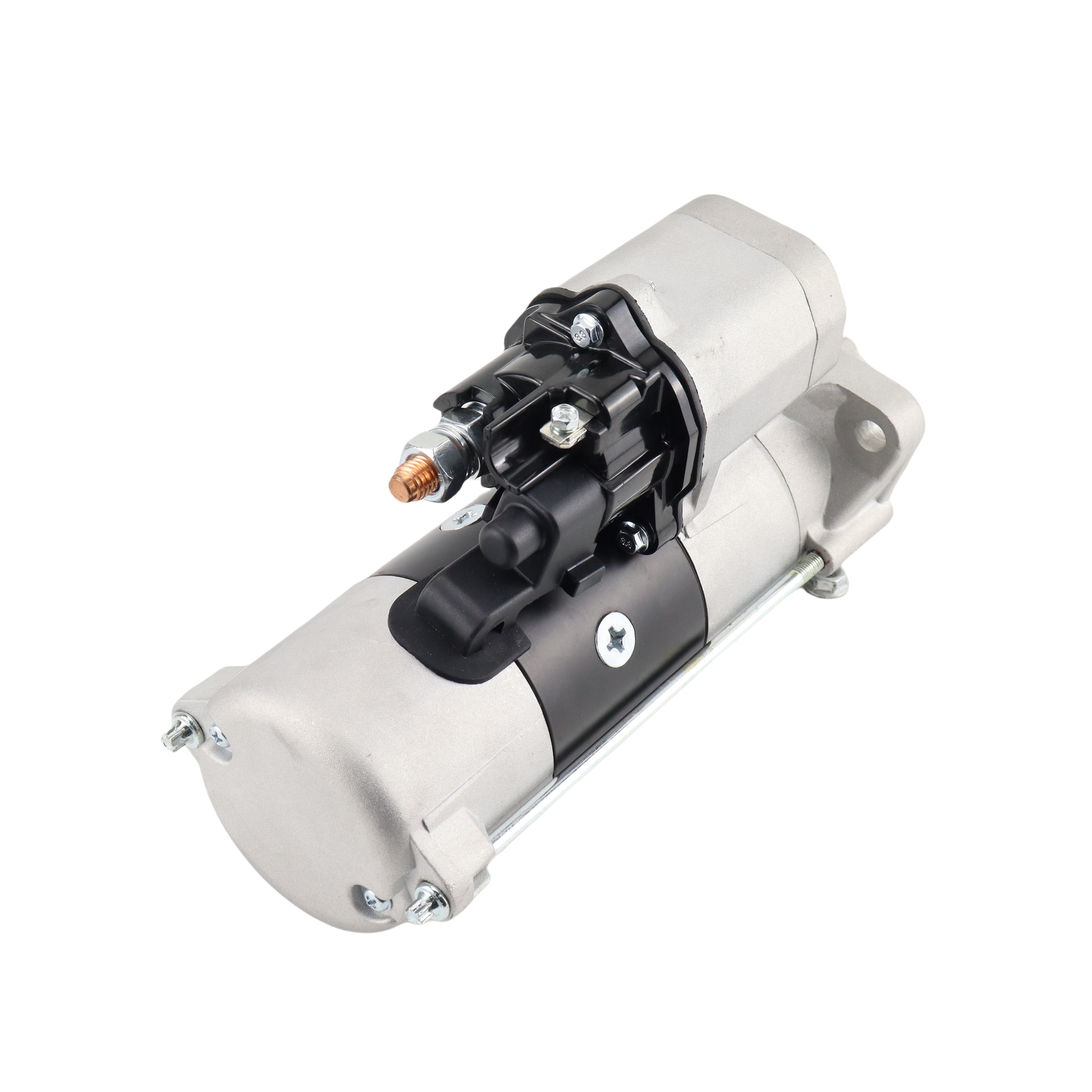
Equipment downtime from ignition failure delivers a direct blow to your operational profitability. Heavy machinery depends entirely on robust components to function reliably day after day. Diesel engines place immense stress on starting systems, particularly in sub-zero environments. They rely on massive compression ratios and heavy internal moving parts to operate effectively. When extreme cold thickens engine oil, the demand on your electrical system spikes dramatically.
This guide equips fleet managers, procurement specialists, and heavy-equipment operators with an objective evaluation framework. You will learn how to specify and source a replacement unit accurately. We bypass basic mechanics to focus purely on critical purchasing criteria. You will understand electrical load evaluations and long-term reliability factors. Ultimately, you can confidently navigate supplier options, verify correct specifications, and minimize unplanned fleet maintenance.
Key Takeaways
Diesel applications require significantly higher torque and cold cranking amps (CCA) than gasoline equivalents; under-specifying leads to premature thermal failure.
Upgrading to gear-reduction architectures (e.g., PLGR or OSGR) often yields better efficiency and lower battery drain than legacy direct-drive units.
Choosing between OEM and aftermarket requires balancing upfront unit costs against the risk of unplanned downtime.
System voltage must strictly align with equipment architecture; heavy-duty applications generally rely on 24V configurations, where specific units like the 24V DENSO starter motor serve as industry benchmarks for reliability.
The Engineering Realities of a Diesel Starter Motor
Understanding the physics behind heavy-duty ignition helps buyers make informed purchasing decisions. Gasoline engines utilize spark plugs to ignite fuel vapor easily. Diesel engines operate on an entirely different mechanical principle. They rely exclusively on the intense heat generated by rapid air compression. To achieve combustion, the pistons must squeeze air hard and fast enough to reach ignition temperatures.
This high-compression challenge demands a specialized, high-torque diesel starter motor. If the engine rotates too slowly, the heat dissipates into the cylinder walls. The engine simply will not start. The system must deliver rapid, sustained cranking power to push past the massive resistance of the engine's internal components.
Manufacturers traditionally built these components using Direct Drive technology. Direct drive units push rotational force at a basic 1:1 ratio. They are inherently larger and noticeably heavier. More importantly, they draw enormous electrical current from the battery bank. Today, modern fleets favor Gear Reduction architectures. Planetary Gear Reduction (PLGR) and Offset Gear Reduction (OSGR) designs utilize internal gears to multiply torque. They maintain a much smaller physical footprint. A gear-reduction unit spins the internal armature significantly faster while demanding less battery strain. This efficiency makes them ideal for cold-weather diesel starting scenarios.
Extended cranking introduces severe thermal risks. Operators often crank stubborn engines continuously during winter mornings. This practice generates immense internal heat. Copper windings inside the housing can literally melt if pushed beyond their duty cycle. Premium commercial models integrate thermal over-crank protection (OCP). An internal thermostat monitors internal temperatures actively. It temporarily cuts the circuit if the heat reaches dangerous levels. OCP prevents catastrophic thermal failure and saves fleets thousands in replacement costs.
12V vs. 24V Systems: Matching Voltage to Equipment Load
Electrical system voltage dictates the operational limits of your machinery. Buyers often need to evaluate 12V applications for light-to-medium duty trucks. Compact agricultural equipment also utilizes 12V configurations successfully. These systems handle standard workloads efficiently. However, they face distinct limitations when paired with high-displacement engines. Extreme cold weather severely hampers 12V cranking performance on massive diesel blocks.
Heavy machinery universally leverages the 24V advantage. Doubling the voltage cuts the required amperage draw precisely in half for the same power output. Lower amperage generates significantly less heat across the electrical circuit. It reduces wiring degradation over time. It also extends the lifespan of internal solenoids and relays. A 24V system easily delivers the crushing torque needed for massive earthmovers and long-haul commercial trucks.
Industry benchmarks rely heavily on these higher-tier electrical configurations. Specific models like the 24V DENSO starter motor dominate the mining, marine, and heavy construction sectors. Engineers prize these units for their exceptional power-to-weight ratios. They deliver sustained durability in punishing environments where failure is not an option. Equipment operators trust these benchmarks to perform daily in remote, off-grid locations.
You must strictly avoid dangerous retrofit risks. Never attempt to mix 12V and 24V components blindly. Installing the wrong voltage unit will instantly destroy delicate onboard electronics. Proper conversions require specialized series-parallel switches and high-amperage relays. Always align your replacement purchase exactly with the factory-designed equipment architecture.
OEM vs. Aftermarket: A Cost-to-Reliability Analysis
Procurement specialists face a constant battle between upfront acquisition costs and long-term reliability. The original equipment manufacturer (OEM) route offers ultimate peace of mind. OEM parts guarantee exact fitment every time. They provide perfect torque matching for your specific engine block. Furthermore, using OEM parts ensures strict compliance with factory warranties. However, buyers must absorb noticeably higher initial costs. Potential supply chain delays can also keep essential machinery grounded for weeks.
Tier 1 premium aftermarket suppliers present a highly compelling alternative. Dedicated engineering firms often redesign components to exceed original specifications. They might install superior environmental sealing or upgrade the internal armature bearings. These units remain highly cost-effective while delivering exceptional longevity. Success here requires strict vetting of the manufacturer's quality control standards. You must confirm they utilize ISO-certified testing facilities.
Conversely, white-label or economy aftermarket parts carry severe risks. Many cheap "remanufactured" units receive little more than a superficial cleaning and a fresh coat of paint. Unscrupulous builders often reuse worn internal components. Frame the risk carefully when evaluating these options. You might save $200 on an economy starter motor upfront. However, if that cheap unit fails on a remote job site, you easily face $5,000 in lost productivity and emergency mechanic call-out fees.
Sourcing Category Comparison Chart
Sourcing Category
Upfront Cost
Reliability & Fitment
Best Use Case
OEM (Original Equipment)
High
Guaranteed exact match
New machinery under strict warranty
Tier 1 Premium Aftermarket
Medium
Often exceeds OEM specs
Out-of-warranty fleets needing high durability
Economy / White-Label
Low
High risk of premature failure
Non-essential, light-duty applications only
Key Evaluation Criteria for Sourcing and Shortlisting
Selecting the correct unit requires precise measurement and careful cross-referencing. A visual match does not guarantee a functional mechanical match. Use the following structured evaluation criteria to shortlist your replacement options accurately.
Rotational Direction & Mounting: You must verify the rotational direction before purchasing. Engines require either Clockwise (CW) or Counter-Clockwise (CCW) rotation depending on their design. Additionally, check the bell housing mounting specifications. Count the number of mounting holes and measure the bolt spacing exactly. Heavy-duty engines utilize standardized SAE sizes, such as SAE 1 or SAE 3.
Pinion Gear Specifications: The pinion gear engages directly with the engine. Count the exact number of teeth on the gear. Measure the tooth pitch and verify the chamfer angle. Installing a unit with mismatched pinion specifications will aggressively grind against the engine's flywheel. This mistake quickly destroys the costly ring gear.
Ingress Protection (IP Rating): Operating environments dictate necessary protection levels. Earthmoving equipment faces constant dust and vibration. Marine applications endure corrosive salt spray and high moisture. Look for units boasting high IP ratings. Verify "wet clutch" compatibility if your transmission bathes the unit in oil. Demand dust-sealed solenoids for agricultural and mining use.
Cranking Output (kW): Power output must match the mechanical load. Align the kilowatt (kW) rating strictly with the engine displacement measured in liters. Do not under-spec the power output to save money. Factor in expected operating temperatures. Cold climates demand higher kW ratings to overcome thick, sluggish engine oil during morning start-ups.
Pre-Purchase Diagnostics: Are You Sure It's the Starter?
Replacing parts blindly wastes money and extends equipment downtime. You must prevent unnecessary purchases through methodical pre-purchase diagnostics. Many operators falsely blame the cranking mechanism when the true fault lies elsewhere in the electrical system.
First, execute a comprehensive voltage drop test. Instruct your technicians to verify overall battery health using a load tester. Inspect heavy-gauge cables for hidden internal corrosion. Clean all grounding connections thoroughly. A perfectly functional unit will fail to engage if it receives insufficient voltage from the battery bank. Voltage must remain stable under the massive load of a cranking attempt.
Next, distinguish between a solenoid failure and a motor failure. Listen closely to the symptoms. A rapid, repeating clicking sound usually indicates a low battery or a bad ground connection. The solenoid lacks the voltage necessary to hold the magnetic field. Conversely, a heavy clunk followed by silence, or a loud metallic whine, points to internal mechanical failure. These sounds often reveal worn carbon brushes, a dead internal armature, or a stripped bendix gear assembly.
Finally, you must heed the hydraulic lock warning. If a previously functional diesel engine suddenly refuses to turn over at all, stop cranking immediately. You must rule out hydrostatic lock. Fluid, such as coolant or unburned fuel, may have leaked into the cylinders. Because liquids do not compress, the engine mechanically binds. Forcing the system to crank against hydraulic lock will catastrophically bend connecting rods or shatter pistons. Turn the engine manually with a breaker bar first to ensure it rotates freely.
Common Diagnostic Mistakes to Avoid
Replacing the unit without load-testing the battery bank first.
Ignoring frayed or corroded ground straps attached to the engine block.
Continuing to crank an engine that refuses to rotate, risking catastrophic internal damage.
Bypassing thermal protection switches during emergency start attempts.
Conclusion
Securing a reliable starting system requires a methodical, evidence-based approach rather than a simple parts swap. First, verify the electrical fault through rigorous voltage drop testing to avoid unnecessary replacements. Next, confirm your specific engine parameters, paying close attention to displacement, rotational direction, and pinion gear teeth. Choose the appropriate voltage and torque ratings required for your climate and operational load. Finally, select either an OEM or a rigorously vetted Tier 1 aftermarket unit to ensure operational longevity.
Before issuing your final purchase order, take immediate action to gather the necessary data. Locate your engine's exact serial number stamped on the block. Cross-reference the original OEM part numbers thoroughly. Consult directly with a technical supplier to verify bell housing dimensions and IP ratings. This structured verification process guarantees fitment, protects your machinery, and ultimately keeps your heavy fleet running smoothly.
FAQ
Q: Can I use a high-torque 12V starter on a heavy-duty diesel engine?
A: Only if the engine was originally configured for a 12V system. While high-torque gear-reduction 12V starters exist, exceeding the designed displacement limits will cause rapid thermal failure. Using a 12V unit on a massive engine originally designed for 24V draws excessive amperage, which quickly burns out internal windings and damages cables.
Q: What is the average lifespan of a commercial diesel starter motor?
A: Lifespan is measured in cycles, not years. In long-haul trucking, a unit may easily last 500,000 miles due to infrequent daily starts. However, in delivery or start-stop applications, the high cycle count may require replacement every 2-3 years. Proper thermal management greatly extends this operational lifespan.
Q: Why does my starter grind against the flywheel?
A: Grinding indicates a mechanical mismatch or failure. It is typically caused by a weak solenoid failing to fully engage the bendix gear. It can also stem from an incorrect pinion tooth count on a newly installed unit, or a severely worn flywheel ring gear. Immediate inspection is required to prevent further damage.