 English

Views: 0 Author: Site Editor Publish Time: 2026-04-27 Origin: Site


If you know how to find the car alternator, you can do simple maintenance. This helps your car stay in good shape and run well.
Make sure your car is on a flat spot. Turn off the engine before you open the hood. Use the hood release lever to open it safely.
Find the alternator close to the serpentine belt. It is usually in front of the engine. Look for a small metal part with a pulley.
Check your car’s owner’s manual for pictures. These pictures can help you find the alternator if you cannot see it well.
Look at the alternator for any damage or leaks. Also, check for loose connections. This helps you find problems early and keeps your car working.
If you still cannot find the alternator, use a flashlight. Try looking from a different angle. You can also ask a mechanic for help.
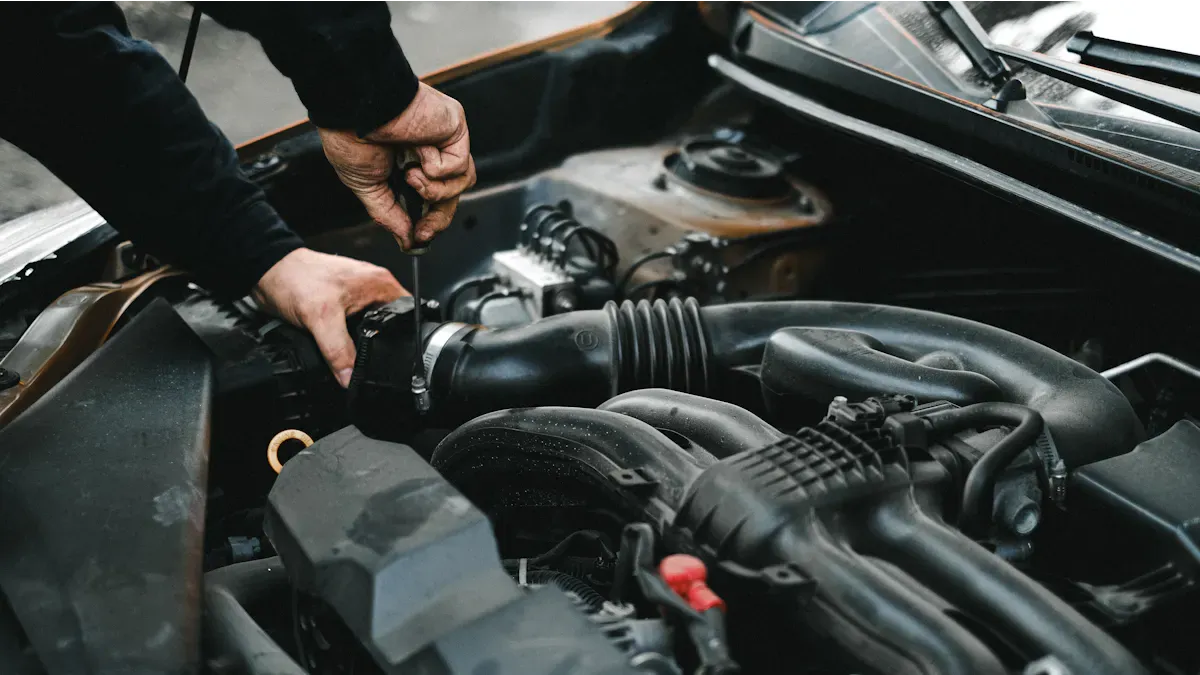
Before you start looking for the alternator in a car, you need to open the hood. Always make sure your car is parked on a flat surface. Turn off the engine and remove the keys from the ignition. This step keeps you safe and prevents any moving parts from causing harm.
Find the hood release lever inside your car. Most cars have this lever near the driver’s seat. Pull the lever to unlock the hood. Walk to the front of your car and feel under the hood for the safety latch. Release the latch and lift the hood. Use the hood prop rod if your car has one, or make sure the hood stays up on its own.
Now that the hood is open, take a moment to look at the engine compartment. Make sure you have enough light to see all the parts clearly. If you need more light, use a flashlight or work light.
Remove any loose jewelry or hanging clothing. These items can get caught in engine parts. Tie back long hair for extra safety.
Take a quick look around the engine. Try to spot the serpentine belt. This belt runs over several pulleys and connects to different engine parts. The alternator in a car usually sits near this belt. You will look for a part with a pulley and some wires attached to it. This is often the alternator.
By following these steps, you prepare yourself to safely find and inspect the alternator.
When you look under the hood, you might wonder where to start. The alternator in a car does not always sit in the same spot. You can find it in a few common places. Knowing these locations helps you save time and effort.
Most cars have the alternator at the front of the engine. You will see it close to the top, near the radiator. The alternator in a car often sits next to the crankshaft pulley. This pulley is a large wheel at the bottom of the engine. The serpentine belt connects the crankshaft pulley to the alternator. You can spot the alternator by looking for a small metal part with a pulley and a belt wrapped around it.
Some cars make it easy to see the alternator. You might notice it right away when you open the hood. The alternator will have wires attached to its back. These wires help send electricity to your car’s battery and other parts.
Not every car has the alternator at the top. Some cars place the alternator at the bottom or on the side of the engine. You may need to look down into the engine compartment or even use a flashlight. The alternator in a car with this setup can be harder to see. It still connects to the serpentine belt and sits near the crankshaft pulley.
If you cannot see the alternator from above, try looking from the side or below. Some vehicles have covers or other parts that block your view. In these cases, you might need to remove a cover or look from a different angle.
By knowing these common spots, you can find the alternator in a car faster and with less stress.

When you open the hood, you can find the alternator by looking for its special shape and connections. The alternator in a car is usually a small metal cylinder. It has a round pulley on the front. A belt goes around this pulley. The alternator’s body has vents or slots to help it stay cool. You will also see wires attached to the back or side. These wires let the alternator send electricity to the battery and other parts.
Here are some tips to help you spot the alternator fast:
Find a metal part with a pulley and a belt.
Look for wires connected to the back.
Check for vents or slots on the alternator’s body.
You should look at the alternator for any damage or wear. Checking often helps you find problems early. Here is a table that shows what to check during a visual look:
Inspection Practice | Description |
|---|---|
Check for visible damages | Look for any physical damage to the alternator. |
Inspect loose connections | Make sure all connections are tight. |
Look for leaks | See if there are any fluid leaks near the alternator. |
Examine for corrosion | Check for rust or corrosion. |
Verify belt alignment and tension | Make sure the alternator belt is straight and tight enough. |
The alternator has a few electrical terminals. Each terminal has a label and a job. If you want to know more about the wires, look at the table below:
Terminal Label | Function | Connects to | Notes |
|---|---|---|---|
P | Drives external device | Electric Tachometer or hour meter | Connected to the stator, may drive outside devices. |
L | Warning Lamp | Alt warning lamp | Used to show alternator status. |
I | Field Current Supply | Switched Ignition 12v+ | Used to excite the alternator. |
S | Voltage Sensing | Main Power Distribution Terminal | Senses voltage to be controlled. |
B or Bat | Alternator Output | Battery / Main Power Distribution | Main output connection of the alternator. |
If you see these labels on the back, you know you found the right part.
The serpentine belt is a long rubber belt. It goes around many pulleys in your engine. You can use this belt to help find the alternator in a car. Start by finding the belt at the front of the engine. Follow the belt as it goes over different pulleys. One pulley connects to the alternator.
The alternator pulley is smaller than the crankshaft pulley. The alternator sits close to the belt. You will see wires coming out of it. If you follow the belt from the crankshaft pulley, you will usually find the alternator after one or two pulleys.
You can also use online guides to help you find the alternator. Here are some trusted sources:
Source | Description |
|---|---|
Billavista | Guide with articles, diagrams, and links for alternator identification. |
Moyer Marine Forum | Forum that helps you find specific alternators and has links to parts lists. |
By using these clues and resources, you can find the alternator and keep your car working well.
Your car’s owner’s manual can help you find the alternator. Most manuals have clear engine diagrams. These pictures show where each part is under the hood. You will see drawings with labels for the alternator, serpentine belt, and other parts.
First, open the index or table of contents in your manual. Look for sections called “Engine Compartment,” “Drive Belt Routing,” or “Electrical System.” These parts of the manual usually have pictures or diagrams. You can compare the manual’s pictures to your car’s engine. This helps you find the alternator, even if it is hard to see.
Owner’s manuals often have instruction sheets for different alternator models. These sheets give you steps for replacing or finding parts. Here is a table that lists some common instruction sheets you might see:
Instruction Sheet | Description |
|---|---|
REPLACEMENT COMPONENTS INSTRUCTIONS 21SI, 22SI | Instructions for replacing components in these alternator models. |
REPLACEMENT COMPONENTS INSTRUCTIONS 33SI, 34SI, 35SI, 36SI | Guidance on component replacement for these models. |
REPLACING A 20DN, 30DN, 41 DN, AND D.C. GENERATORS WITH A 30SI ALTERNATOR | Instructions for replacing older generator models with a 30SI alternator. |
Check the owner’s manual if you cannot find the alternator. If you look under the hood and do not see it, the manual can help. The diagrams and instructions show you where to look. This saves time and helps you avoid mistakes.
You should also use the manual if your car’s engine looks different. Some cars put the alternator in unusual places. The manual will show you these special spots. If you want to replace or fix the alternator, the manual gives you the right steps and safety tips.
You do not have to guess or search without help. The owner’s manual gives you good information. You can feel sure when you use it as your guide.
Sometimes, you may not see the alternator right away. Many cars have engine covers, hoses, or air intake parts that block your view. You might feel frustrated if you cannot spot the alternator after opening the hood. Do not worry. You can use a flashlight to look into dark corners. Try changing your position and look from the side or even from below the engine compartment.
If you still cannot see the alternator, check for plastic shields or covers. Some cars use these to protect engine parts. You can remove these covers by loosening a few screws or clips. Always keep track of any screws you remove. Place them in a small container so you do not lose them.
You may notice some signs if your alternator is not working well. These signs can help you confirm that you have found the right part. Look for these common issues:
The car starts inconsistently.
The battery does not recharge.
The headlights dim while driving.
The battery drains quickly or you need frequent jump-starts.
If you see these symptoms, you are likely looking at the alternator. You can also check for loose wires or worn belts. These problems often cause alternator issues.
You can use a table to keep track of your troubleshooting steps:
Step | What to Do | Why It Helps |
|---|---|---|
Use a flashlight | Shine light into hidden areas | Reveals blocked components |
Remove covers | Take off plastic shields carefully | Gives better access |
Check connections | Inspect wires and belt for damage | Finds common problems |
Listen for sounds | Notice any whining or grinding noise | Indicates alternator wear |
By following these steps, you can locate and check the alternator, even if it is hidden or blocked.
You can find the alternator by opening the hood, following the serpentine belt, and checking your owner’s manual. Use a flashlight if you need more light. Practice helps you spot the alternator faster each time. Remember, the location affects how much you pay for repairs:
Compact cars: Easy access means lower costs.
Mid-size sedans: Some need more work, raising costs.
Trucks and luxury cars: Complex layouts increase expenses.
If you still cannot find the alternator, ask a professional for help.
You can usually find the alternator at the front of the engine. Look for it near the serpentine belt and the crankshaft pulley. It often sits on top, but sometimes you need to look from the side or below.
The alternator looks like a small metal cylinder with a round pulley on the front. You will see wires attached to the back. The body often has vents or slots for cooling.
You may notice dim headlights, a dead battery, or trouble starting your car. Sometimes, a warning light appears on your dashboard. If you see these signs, check the alternator.
You can replace the alternator if you have basic tools and follow safety steps. Always disconnect the battery first. If you feel unsure, ask a mechanic for help.


